

Living Smaller - On Purpose
Why intentional downsizing expands what’s possible, rather than narrowing it

This letter is part of Design Dispatches, design-forward essays exploring how spaces (both indoors and out) are shaped, why design choices matter, and how the built environment influences the way we live. You can easily adjust your email preferences anytime to skip this section and still receive all the other stories, reflections, and design inspiration from The Whiskey Porch.
Hello my lovely readers.
Welcome to the porch.
This letter is the third in a short series exploring smaller living - from the original invitation, to the idea of right-sizing, to the intentional choice itself. In the final piece next month, I’ll share the surprising gifts that begin to appear on the other side of that decision.
Most people don’t choose smaller living until they have to.
The decision arrives through necessity (sometimes with a bit of kicking and screaming) - aging, loss, finances, changing bodies, changing energy. And by then, the choice can feel reactive rather than intentional.
And difficult. And exhausting.
But what happens when that decision is made earlier? Not as an escape, and not as an ideology - just as a thoughtful, long-range choice about how you want to live?
I’ve come to believe that choosing earlier changes everything.
It allows scale, comfort, beauty, and adaptability to be considered together. It turns downsizing from something endured into something shaped.
In a smaller, more intentional home, details matter more. Light. Storage. Circulation. How rooms connect to one another and to the garden beyond. Hospitality becomes flexible rather than formal. Beauty stops being decorative and starts becoming essential and fully integrated into your space.
There’s no single right answer to how much space is enough.
But there is something powerful about asking the question before urgency forces it.
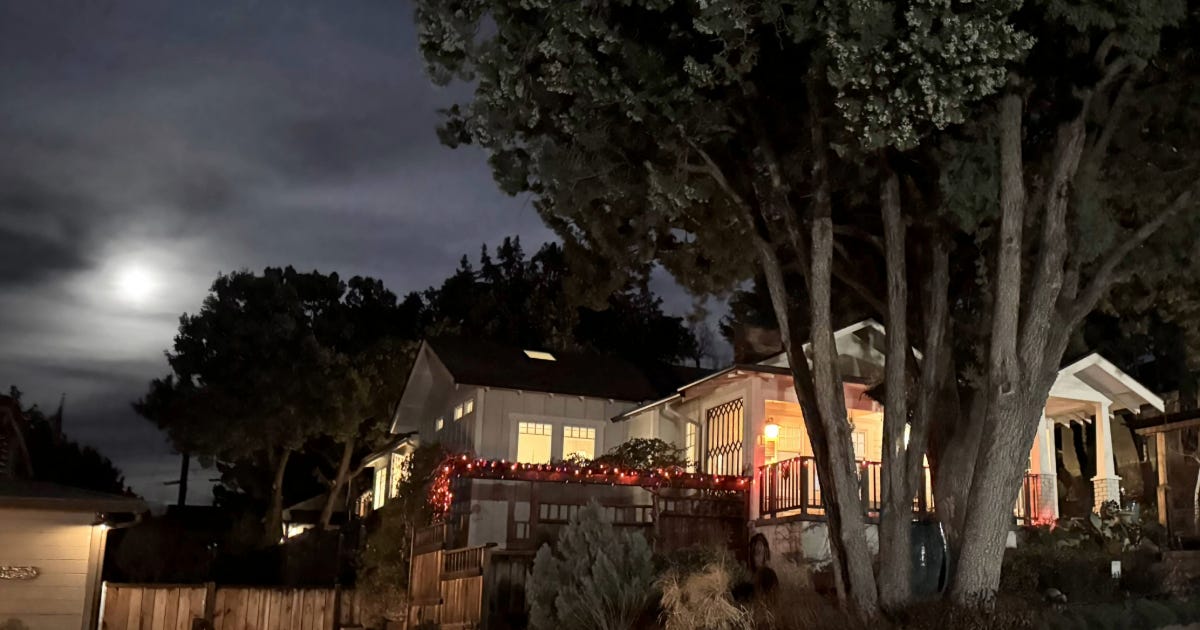

It Can Be a Harsh Ending
When smaller living is forced, or never happens, it can be a harsh ending.
I see it happening over and over - in this anguished, resistant struggle. Older folks who have lived a large life, in a large home, raised kids and pets and gardens. Where their homes just continue to accumulate the stuff of life in dusty corners and forgotten boxes crammed into corners.
And then suddenly, after years of resisting the downshift, these folks are forced to make an urgent decision (or even more often rely on their adult children to make the choice) of where to go at a moment’s notice because their finances or health just no longer support the maintenance and upkeep of their home.
My father was one of these who chose to hang on to his large and beautiful home - partly because he was in denial that he could handle it all and arrange things for his passing as he suffered with a terminal illness. And partly because he at that point was just too overwhelmed to think through a decision like that - understandably.
We ended up rescuing him on death’s door (literally kicking and screaming) and getting him setup in hospice care for one last week of life with some dignity. He thanked me.
The ensuing 18-month process of getting his belongings and property sorted, dispersed, and managed was painful, overwhelming and complicated.
It didn’t have to be like that.
It broke my heart into a thousand pieces.
If you've ever thought about what you'd want to spare the people who love you - the sorting, the deciding, the 18 months of grief tangled up with logistics - you already understand something most people don't face until it's too late. Choosing earlier isn't giving something up. It's one of the last real gifts you get to give on your own terms.

Choosing earlier changes the design equation
Stories like that have altered the way I think about our homes and the choices we make about them.
There’s so much more grace in making that decision to let go of the stuff and the space MUCH earlier in life.
Granted there’s that period in life where literally everything expands - with children, comes the need for more space and the things of life to support them as they grow and learn.
But there’s a definite moment where the last kiddo has flown the nest (or been gently pushed out). As it should be. They are out in the world building their own path and popping in only occasionally to be “at home” with you and their larger family.
I can promise that they do not need their childhood room and en-suite bathroom to feel welcome and “at home”.
There’s that moment when you have a full life still ahead of you, and no longer need those trappings of the square footage and massive storage spaces and extra bedrooms.
The opportunity to make a thoughtful plan, to align your home space with how you truly live now, becomes a planning advantage.
Scale becomes a design decision rather than a heart-wrenching compromise.
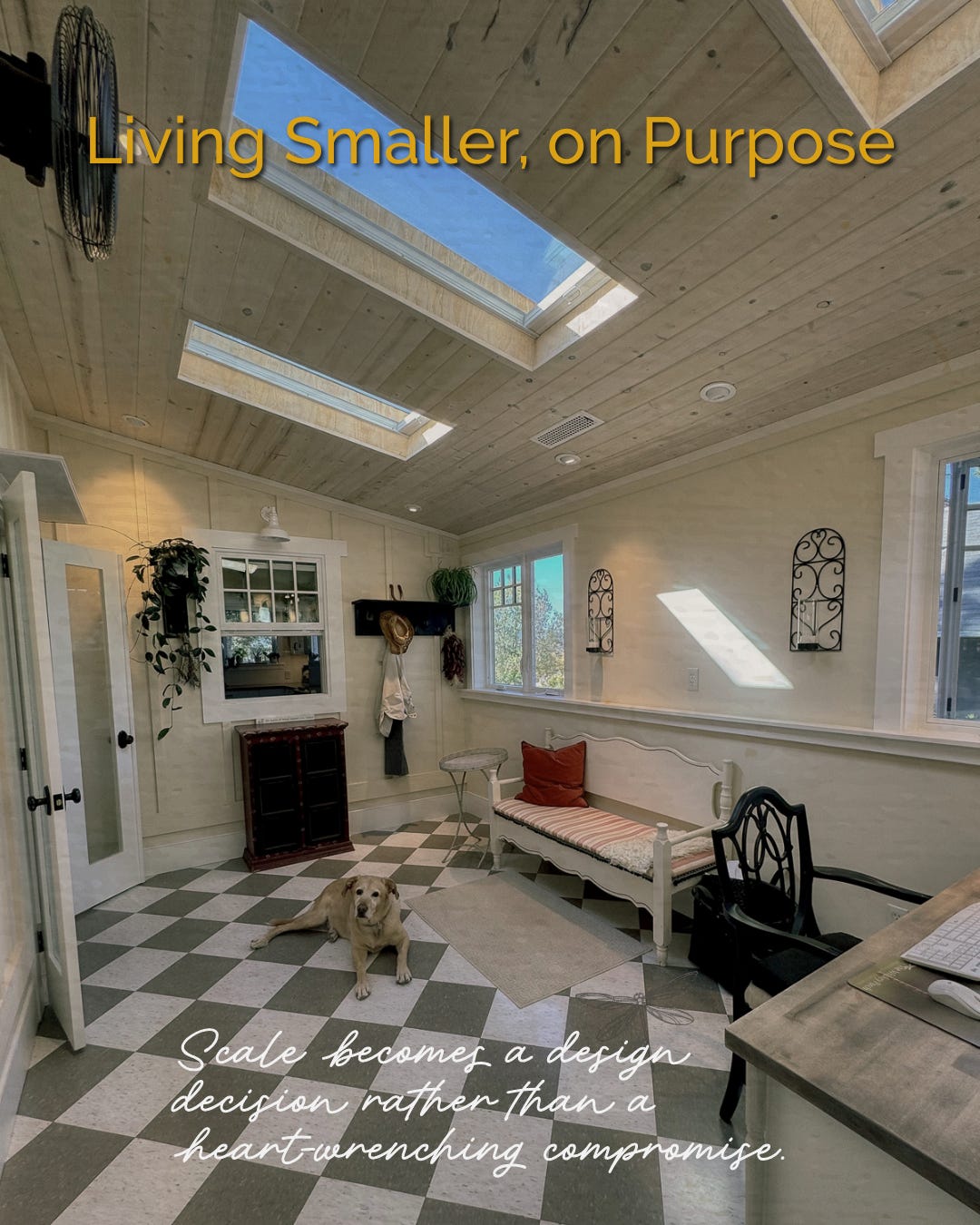
You can imagine an elegant solution that allows you to live life to the fullest and ALSO to age gracefully in a flexible and adaptable situation. And make that shift in a thoughtful and easeful way.
Your priority can be your lifestyle rather than maintaining what you currently have.

Smaller spaces demand better design
Smaller homes are often perceived as less desirable - because so often the design is non-existent. But thoughtful edits and adjustments can completely shift that reality.
It does require imagination, thoughtful design, and effort. It can take time. Whether you are remodeling an older smaller home, or building one. Even new builds are often a bit soul-less. At first.
In my professional design work, I can spend weeks working closely with homeowners to address the finer points of layered and intentional lighting, integrated and effective storage, the circulation and flow of the spaces and the interior connection to the outdoor spaces.
The color plan and the quality of the finishes can be uplifted to bring warmth, and space, and elegance.
Gardens, porches, and patios expand your living spaces and should be fully incorporated into the larger plan.
The most insightful design moments happen when someone visits our cottage and is thrilled with the spacious feeling and thoughtful design - only to be shocked and amazed to find out how small it really is. Those reactions are proof that a well designed space can function not only for our personal needs and activities but even for entertaining and large gatherings.

The freedom in smaller living
Smaller living isn’t about deprivation. It’s about alignment.
I’ve written much more extensively about these advantages, but I wanted to include a short discussion on the many advantages.
First and foremost is the expanded time and energy for doing what truly matters most to you. That freedom of how to spend your time, and your resources, is the prize that is well worth the effort to downsize as soon as possible.
Lest I neglect to mention the obvious - a smaller home requires less maintenance, less resources to heat and cool, less effort and time to clean.
A smaller home virtually always offers significant financial breathing room.
Hospitality becomes less about impressing and more about connecting and sharing.
And, of course, there’s less space to store the stuff that burdens your closets and attics while living in mysterious, dusty boxes.
It’s stuff - you can’t take it with you….

Agency rather than inertia
I think part of the inertia that many of us feel when we have an established home, that we’re used to, and reasonably comfortable in, is that we can’t imagine what it would feel like to start again.
Maybe you’re in your forties or fifties when it’s just you and your partner - the kids are off in the world. Or you’re in your thirties and not planning to have kids.
That moment is an invitation to pause and ask a few honest questions:
How much space do I really, truly, actually use on a daily basis?
Which spaces and rooms are the ones that shape my daily life?
What would I honestly need to keep if I could flip the switch and start again?
Don’t focus on what’s challenging about that shift.
Instead, focus on what would be exciting and amazing and freeing.
What might shift - in your home, your time, or your sense of freedom - if you chose more deliberately, sooner rather than later?

Next and last in this 4-part series: what actually shows up on the other side of less.

ICYMI: the first two segments.


🌼A note before you go.
This series is part of something bigger I’m building - structured design thinking for real homes, not just occasional essays. It’s still taking shape, and if “small, not tiny” resonates with you, you’ll hear about what’s next, here first.
In the meantime, paid subscribers already have access to The Gift Library — a growing shelf of seasonal guides, design resources, and recipes gathered along the way. Worth a look, even if you’ve never grown a tomato.
I’m honored to have you here, following along. Thank you.
With contentment & possibility,

P.S. As ever, I truly love to hear your thoughts and comments and get a conversation going. Tell me: What might shift - in your home, your time, or your sense of freedom - if you chose more deliberately, sooner rather than later?
Miriam, I'm sorry you had to go through that with your Father and the aftermath of dealing with his stuff. I had to go through my parents' when my Mom was moving to be closer to my brother after my Dad passed and it was so much more difficult than if they had done so of their own accord earlier on.
Although in true Dad "keeping it light" fashion, we actually had some moments of laughter as we discovered a series of crockpots of assorted sizes. For some reason it struck us funny that Dad apparently had a crockpot obsession no one knew about.
That aside, I love the case for smaller living and am definitely considering as I look to move later in the year of getting just the right size place. I've already been actively downsizing stuff and never accumulated that much since we've moved so much over the years.
Thank you, Jay, for the restack.