


This letter is part of Design Dispatches, design-forward essays exploring how spaces (both indoors and out) are shaped, why design choices matter, and how the built environment influences the way we live. You can easily adjust your email preferences anytime to skip this section and still receive all the other stories, reflections, and design inspiration from The Whiskey Porch.
Hello my lovely readers.
Welcome to the porch. Come on in, stay awhile.
Today we’re talking about what makes a home comfortable. Somewhere between “bigger is better” and “tiny is virtuous,” most of us are tentatively asking the same thing:
“What’s just right for real life?”
In my last Design Dispatches post, Smaller, Simpler, More Beautiful, I explored why extremes tend to fail us - why more space doesn’t always mean more ease, and why radical reduction can create its own kind of strain.
Today is about the what. Not a manifesto. Not a square-footage debate. Just clarity.
When you imagine a smaller home, what do you hope it gives you more of -time, calm, beauty, freedom?

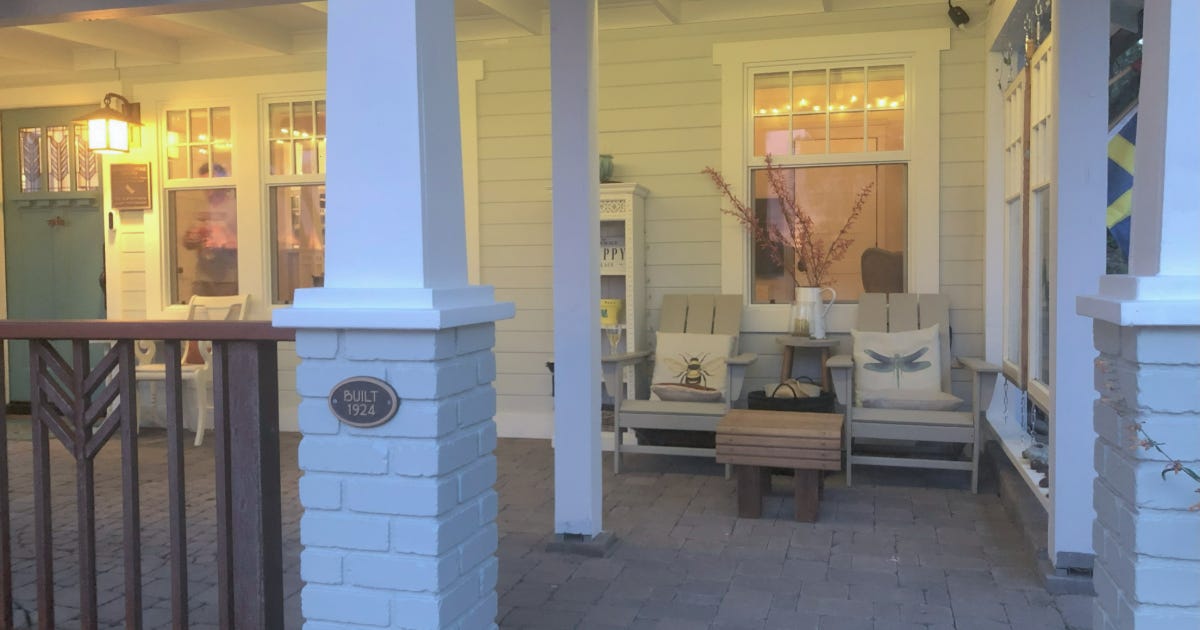
Our culture loves extremes. Oversized homes on one end. Tiny homes on the other. Both are highly visible, highly symbolic, and highly polarizing.
But most of us don’t actually live - or want to live - at the edges.
Most are looking for a home that feels:
lighter, but not fragile
simpler, but not cramped
beautiful, but still cozy
That’s the missing middle. And it’s where “small, not tiny” lives.
Call it the Goldilocks question if you like - not too much, not too little, but just right for the way life actually unfolds.
Have you ever felt caught between “too much house” and “not enough room to breathe”?
If you've ever stood in a kitchen that's technically enormous and still felt like there was nowhere to actually set anything down - or walked past a guest room that sits empty nearly every night of the year while your actual life happens around it - you already know what "too much house, not enough room to breathe" feels like.

Tiny homes are ingenious. I mean that sincerely. They are brilliant exercises in efficiency and constraint. Rather romantic really.
But here’s the distinction that matters:
Tiny homes optimize space. Right-sized homes absorb change and embrace life.
Most people don’t need a home that requires constant optimization.
They need a home that can handle guests, illness, work shifts, aging bodies. A home that flexes with evolving relationships and families expanding and shrinking - without becoming a daily performance.
Tiny living works best when life is stable and predictable. For many others, it becomes rigid. Every item must justify itself. Every disruption creates friction.
And friction isn’t the same thing as simplicity.
Where in your life do you need flexibility more than efficiency (or square footage) right now?

“Small, not tiny” isn’t a number. It’s a set of priorities.
A right-sized home focuses on proportion, flow, and livability - not just reduction.
It tends to have:
Rooms that can change roles without collapsing
Circulation that respects the footprint, rather than wasting it
Quiet, integrated storage for what you actually use and need
Clear thresholds - an entry moment, a porch, a garden gate - that let the home live a little larger
Spaces that earn their keep, instead of sitting idle or over-specialized
Space in the budget for fewer, but better details
This is the difference between a home that looks efficient on paper and one that feels generous day after day.
Which spaces in your home work hardest for you - and which ones fight you?
Every home is a set of tradeoffs.
The trouble with trends is that they pretend there’s a perfect answer.
There isn’t.
There’s only a better fit for real life.
If you’ve ever walked into a home and thought, “It’s small, but it feels right,” you’ve felt good tradeoffs at work - proportion and thoughtful design doing more than square footage ever could.
“Enough” isn’t a moral achievement. It’s a design outcome.
A right-sized home doesn’t ask you to perform restraint or prove virtue. It simply supports you - comfortably, reliably - through ordinary days and inevitable change.

Next in this 4-part series: I’ll get practical - how smaller homes succeed or fail based on circulation, storage, thresholds, and flexibility - the unglamorous details that make rooms earn their keep.

And, in case you missed it: The prior post in this series.

🌼A note before you go.
This series is part of something bigger I’m building - structured design thinking for real homes, not just occasional essays. It’s still taking shape, and if “small, not tiny” resonates with you, you’ll hear about what’s next, here first.
In the meantime, paid subscribers already have access to The Gift Library — a growing shelf of seasonal guides, design resources, and recipes gathered along the way. Worth a look, even if you’ve never grown a tomato.
Thank you for being here with me. Truly.
With contentment & possibility,

P.S. These letters are meant to be a conversation, not a conclusion.
If you’re wrestling with what “small, not tiny” means in your own life, I’d love to hear where you are in that thinking.
What would be just right for you - not in an ideal life, but in your real one?
Miriam, I love this concept of looking for a right-sized home! Especially in the past when I've rented furnished homes, I had to work with rooms that dealt me constraints such as having every bedroom set up as just that where I need at least one full home office room and my husband needs at least a partial.
Even when it's unfurnished, I realize that I look for a certain flow of spaces that feel right for my purposes. I could never make a tiny home work and even though I look at some big houses at times like "I want one of those" the reality is it's not practical or necessary.
I'll be looking for "just right" in my next home when I move later this year.
Adding to my reading list Miriam. Looking forward to it :)