


Hello my lovely readers, come on in.
Welcome to the ‘Porch Journal’, a short-letter series where I share small reflections and behind-the-scenes thoughts on living a smaller, simpler, more beautiful life. These are quick, easy reads, about a minute or two - just enough for a mid-morning coffee break.
In today’s Porch Journal, I’m sharing a few vintage botanical illustrations inspired by winter woodlands.
I know many of you are deep in the dark and chilly days of the season right now.
Here, in the high-country of northern Arizona I find so much comfort in the steady presence of trees. The huge Ponderosa Pines and Alligator Junipers that surround us offer a kind of reassurance: strong, grounded, and enduring.
I’ve long been drawn to botanical artwork, though I’m not entirely sure why.
Maybe it’s the careful observation of the artists. The patience. The detail and skill. The way these pieces ask us to slow down and really see.
I’ve always hoped to try my hand at pencil illustrations one day, but for now I content myself with collecting - a few old botanical prints hang on the walls of our little 1924 Craftsman bungalow, and digital images of many more.
I love their beauty, yes, but I also love the history behind them.

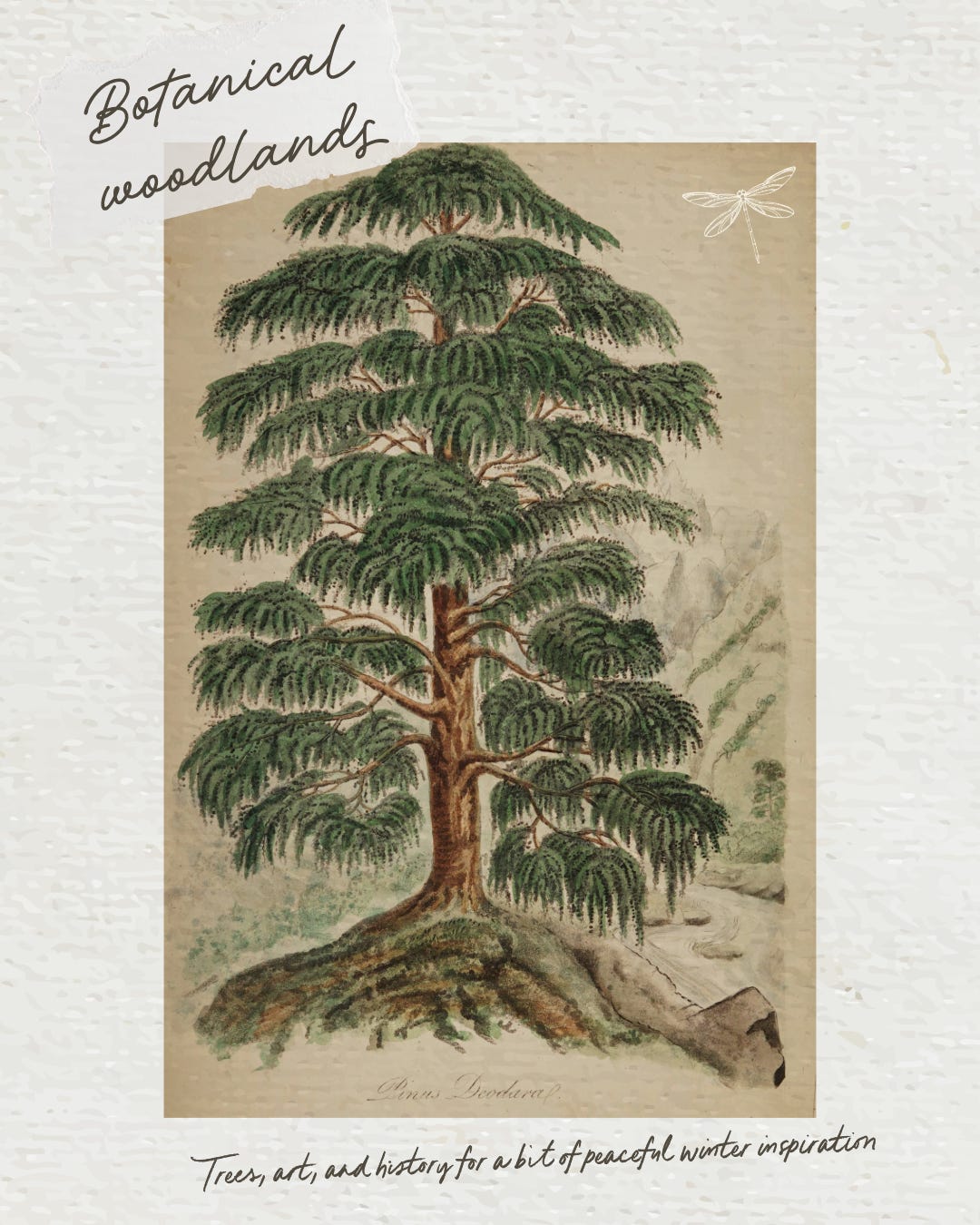
Pinus Deodara (Deodar Cedar)
From A Description of the Genus Pinus, 1824, Aylmer Bourke Lambert - England
There’s something so inspiring about botanical studies like this one - the patience, the precision, the deep respect for the plant itself. These works weren’t rushed. They were created through careful observation and devotion, and you can feel that still, centuries later.
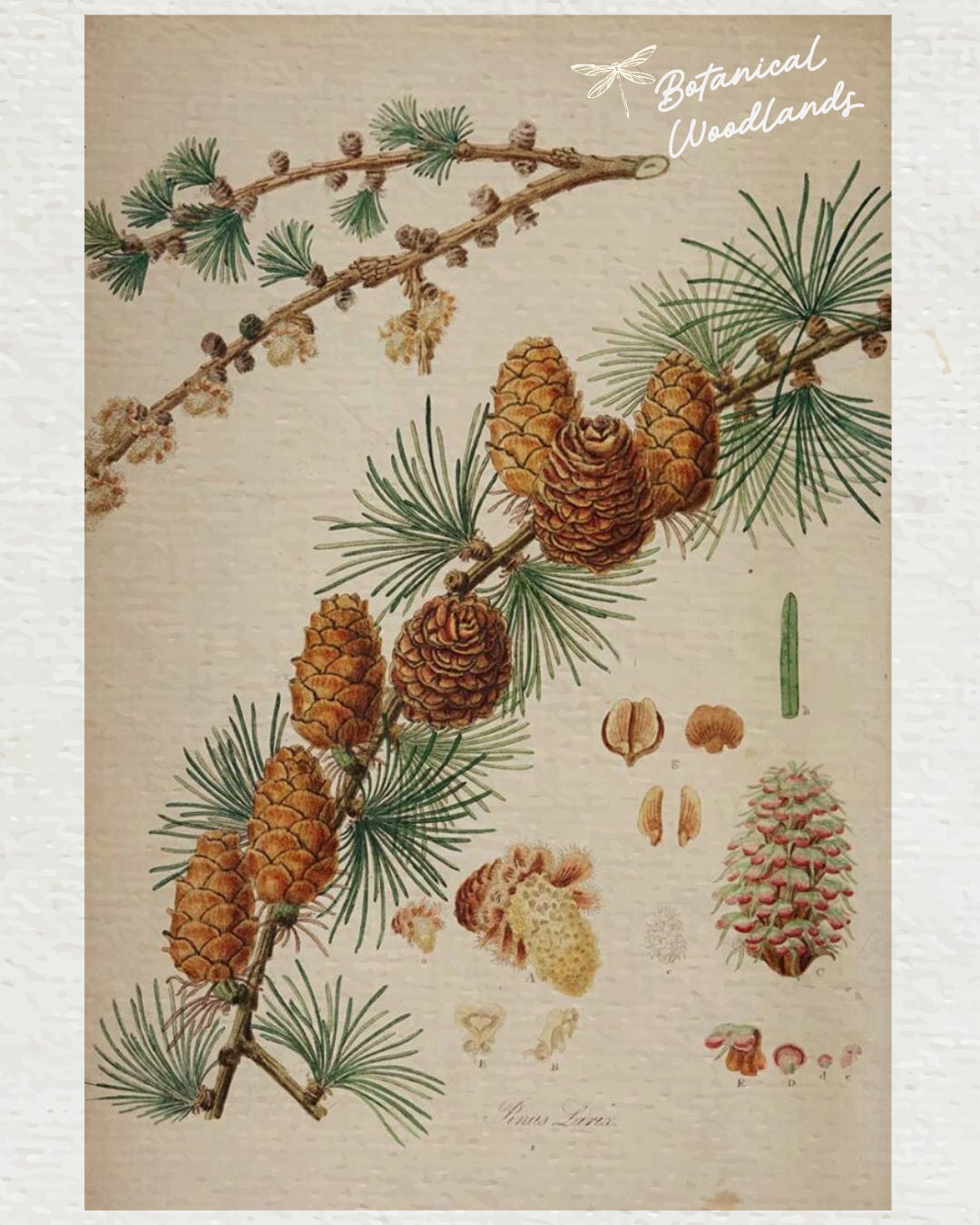
Pinus larix (Larch)
From A Description of the Genus Pinus, 1824, Aylmer Bourke Lambert - England
I love that Larch is a conifer that breaks the rules - soft needles, golden fall color, then bare branches in winter.
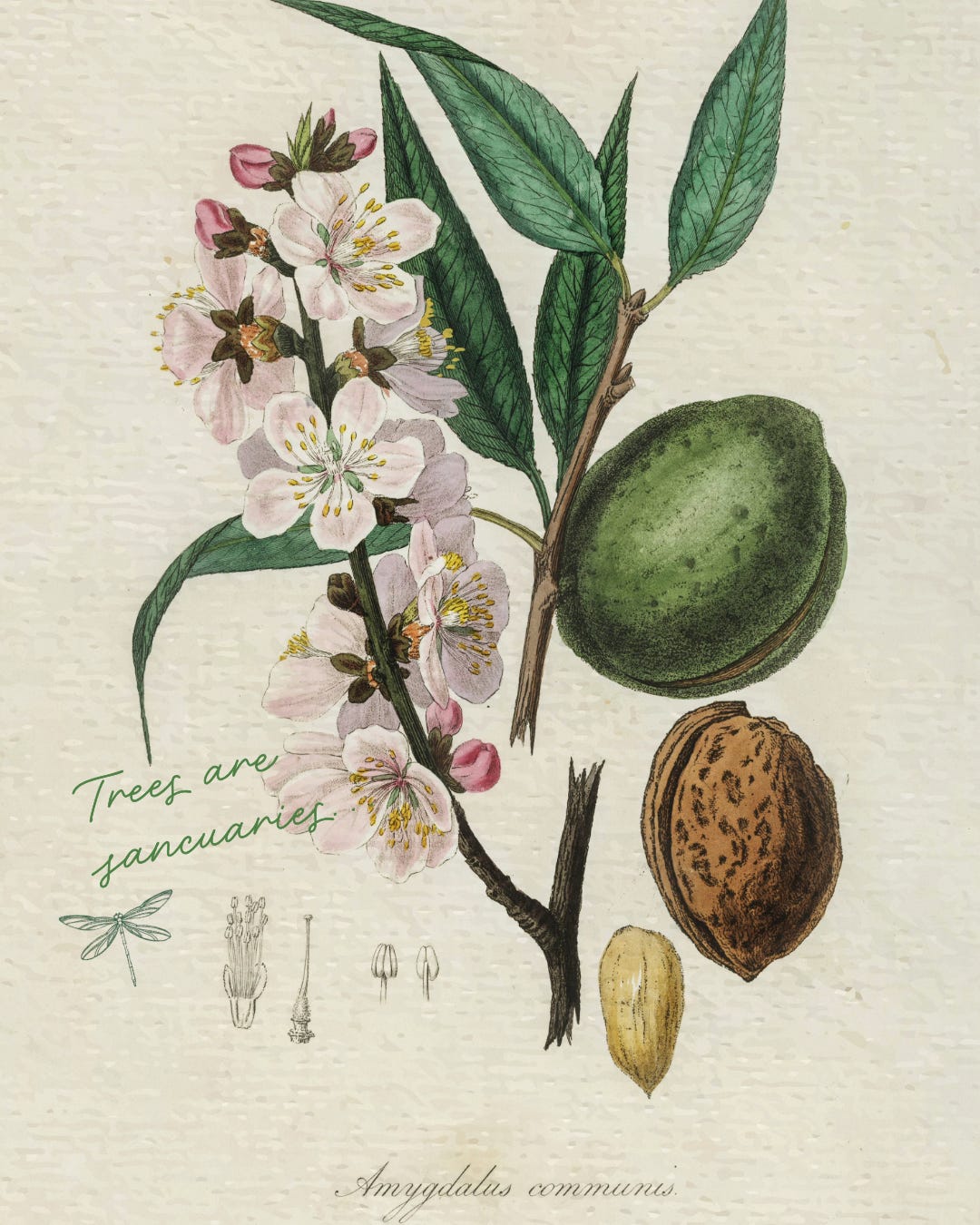
Attributed to Pierre-Joseph Redouté — France
Amygdalus communis (Almond), late 18th–early 19th century - Botanical illustration, watercolor and ink
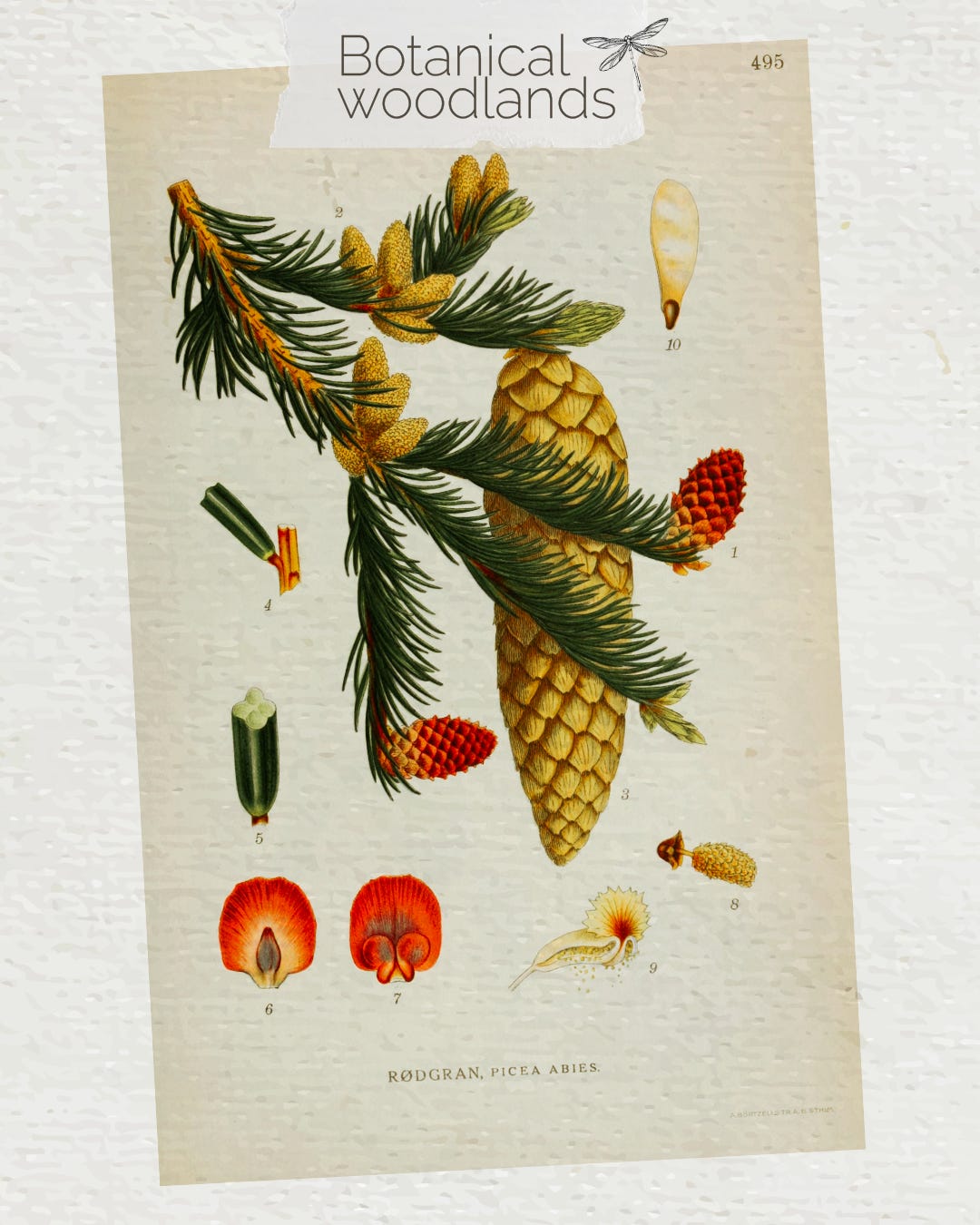
From A Description of the Genus Pinus (1824)
Aylmer Bourke Lambert — England, Botanical illustration (engraving with hand coloring)
Lambert wasn’t out hiking and sketching in the wilderness himself. He was more of a scholarly botanist and collector - working from specimens and correspondence sent to him from explorers and nurseries around the world. That actually makes these plates feel even more remarkable: they were part of a global exchange of scientific discovery during the early 19th century.

Over the next few weeks, I’ll be sharing some close looks at my hellebores - the true drama queens of the winter garden - in my daily Notes on Substack. I’d love to have you join me over there.
And if you’re a fellow gardener, I also share a Garden Keeping Journal on the first Saturday of each month. The March edition goes out soon to all subscribers.

I enjoy sharing these small moments and spaces that shape our lives. Let me know what you think.
Thank you for spending a little porch time with me today!
With contentment & possibility,

Did you know you can ‘like’ and comment on this letter?
If you’d like to join the conversation, you can follow the link below to read and respond in the Substack app. It’s free and ad-free.

P.S. I read every comment, and I always enjoy hearing from you. If you’d like to join the conversation, comments in the Substack app are the easiest way.
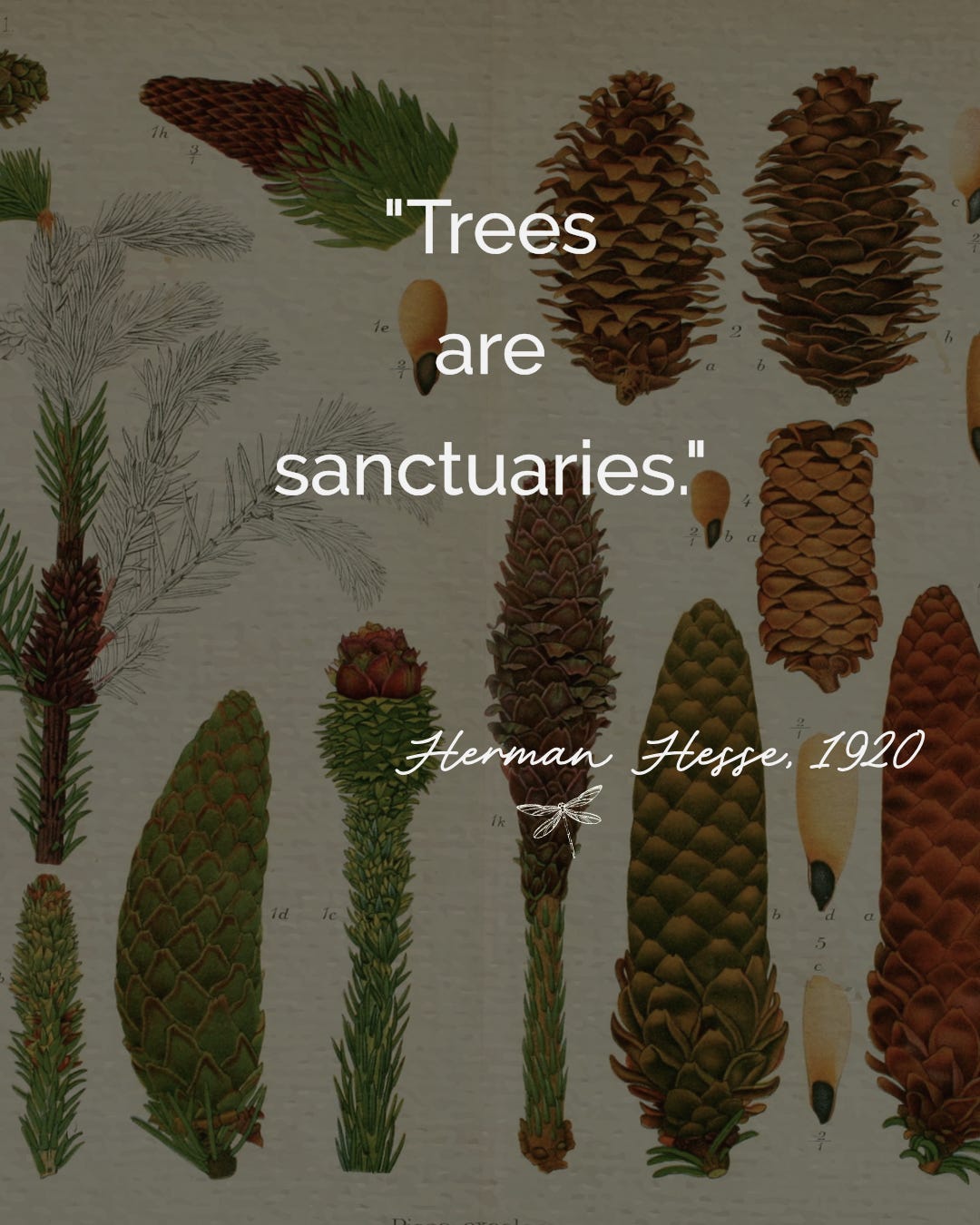
Trees ARE sanctuaries. 😊🌲Lovely drawings.
MIriam, I never really thought of botanicals as art before you started sharing these :)